What Is Frequent Urination at Night a Sign Of? The Science of Nocturia and Men’s Health
Imagine the scenario: the clock strikes 3:00 AM. You are pulled from a deep, restorative sleep by a familiar, nagging pressure. You stumble to the bathroom, only to return to bed and find that the “sleep switch” in your brain has been flipped off. By 7:00 AM, you feel like a ghost of yourself—irritable, brain-fogged, and physically drained.
If this happens once in a while, it’s an inconvenience. If it happens every night, it’s a clinical condition called Nocturia.
In the world of health optimization, we often focus on what we do while we are awake. But at The Vital Science, we know that true longevity is built during the hours of stillness. Frequent urination at night is more than just a “sign of getting older”; it is a physiological distress signal from your body. In this comprehensive guide, we will dive into the science of why your bladder is overriding your brain and what this symptom is trying to tell you about your internal health.
The Circadian Science: Why Your Bladder Should Sleep When You Do
Under normal physiological conditions, the human body is a masterpiece of efficiency. During the day, your kidneys work at a standard Glomerular Filtration Rate (GFR), filtering waste and managing fluid balance. However, as the sun sets, your internal biological clock—the circadian rhythm—triggers a shift in renal function.
The key player here is the Antidiuretic Hormone (ADH), also known as vasopressin. In a healthy system, ADH levels spike at night, signaling the kidneys to reabsorb more water back into the bloodstream. This concentrates the urine and reduces the volume sent to the bladder, allowing for 6 to 8 hours of uninterrupted rest.
When you experience frequent urination at night, this hormonal signaling is often disrupted. Whether it’s a drop in ADH production or a bladder that has become “hypersensitive” to even small amounts of fluid, the result is a fragmented sleep cycle that prevents you from reaching REM and deep sleep stages, where cellular repair actually happens.
The Hidden Triggers: From Lifestyle to Pathology
Before jumping to conclusions, we must analyze the hierarchy of causes. Nocturia is rarely the result of a single factor; it is usually a perfect storm of lifestyle habits and underlying biological shifts.
1. Lifestyle Factors: The Usual Suspects
It seems obvious, but the “what” and “when” of your fluid intake matter. Caffeine and alcohol are the primary culprits. Caffeine is a natural diuretic that increases GFR, while alcohol suppresses ADH production in the brain. If you consume these within 6 hours of bedtime, you are essentially “inviting” your bladder to wake you up. Additionally, peripheral edema (fluid buildup in the legs) can cause nocturia; when you lie down at night, that fluid returns to the heart and is processed by the kidneys, filling the bladder.
2. Metabolic Syndrome and Insulin Resistance
There is a profound link between metabolism and urinary frequency. High insulin levels (hyperinsulinemia) can cause the kidneys to reabsorb sodium, which in turn leads to fluid retention and increased urine production at night. For many men over 50, nocturia is one of the earliest “soft signs” of Type 2 Diabetes or pre-diabetes. If your blood sugar is high, your kidneys work overtime to flush the excess glucose out through your urine—taking a lot of water with it.
3. The “Elephant in the Room”: Benign Prostatic Hyperplasia (BPH)
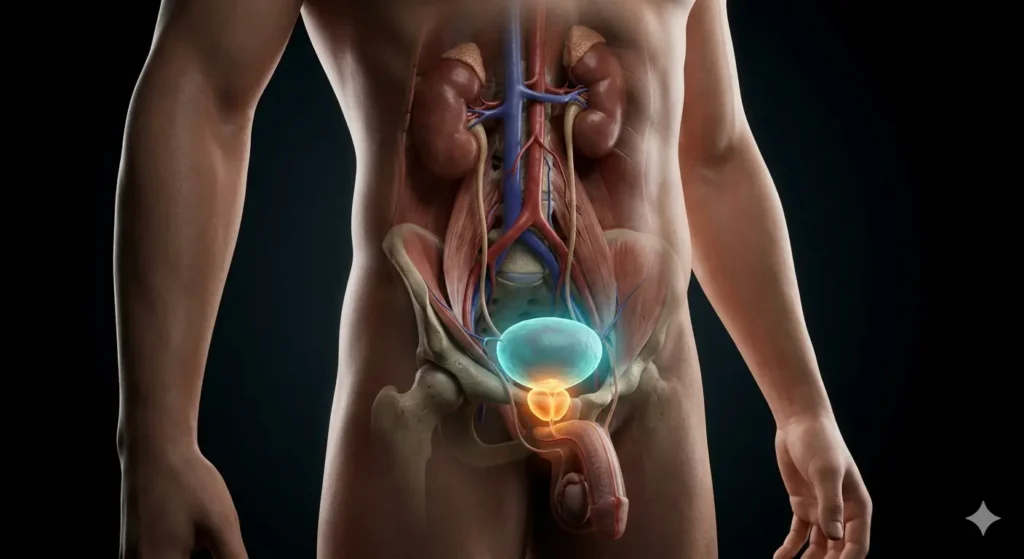
For the majority of men over 50, the most common answer to “what is frequent urination a sign of?” is an enlarging prostate. Benign Prostatic Hyperplasia (BPH) is a non-cancerous growth of the prostate gland. Because the prostate surrounds the urethra (the tube that carries urine out of the body), even a slight increase in size can create a “bottleneck” effect.
This leads to a cruel irony: your bladder feels full because it can never quite empty itself completely during the day. This residual urine means the “tank” is always half-full, causing you to need the bathroom again much sooner than normal.
The Vital Connection: How Prostate Health Dictates Your Quality of Life
The prostate isn’t just a reproductive gland; in the context of nocturia, it acts as a gatekeeper. When BPH symptoms arise, the bladder muscle has to work harder to push urine through the narrowed urethra. Over time, the bladder wall becomes thicker and less elastic.
Common enlarged prostate symptoms include:
- A weak or “dribbling” urine stream.
- The sensation that the bladder isn’t empty after going.
- Urgency: The sudden, uncontrollable need to urinate.
This is where prostate support becomes vital. If you don’t address the inflammation and growth of the prostate tissue, the bladder will eventually lose its tone, making nocturia a permanent fixture of your life. Protecting this gland is not just about avoiding surgery; it’s about reclaiming your right to a full night’s sleep.
What Modern Science Suggests: The Path to Restoration
The traditional approach to nocturia was often “wait and see” or aggressive pharmaceutical intervention. However, modern nutritional science and phytotherapy have identified several key compounds that support the delicate balance of the male urinary system.
- Saw Palmetto: Research suggests this botanical may inhibit the enzyme (5-alpha reductase) that converts testosterone into DHT, the hormone primarily responsible for prostate growth.
- Beta-Sitosterol: A plant sterol that has shown significant promise in clinical trials for improving urine flow and reducing the amount of residual urine left in the bladder.
- Lycopene and Zinc: Crucial antioxidants that protect prostate cells from oxidative stress and inflammation.
At The Vital Science, we track the evolution of these discoveries. We are seeing a shift away from “single-ingredient” solutions toward synergistic formulas. These modern complexes combine the hormonal regulation of Saw Palmetto with anti-inflammatory agents to tackle nocturia from multiple angles simultaneously.
FAQ: Your Questions Answered
Can nocturia be cured? In many cases, yes. By identifying the root cause—whether it’s managing blood sugar, reducing prostate inflammation, or adjusting fluid timing—you can significantly reduce or eliminate nighttime trips to the bathroom.
Is frequent urination just a normal sign of aging? It is common, but it is not optimal. While the prostate naturally grows with age, the debilitating symptoms of nocturia should not be accepted as an inevitable part of life. They are manageable with the right scientific approach.
Should I stop drinking water after 6:00 PM? While reducing fluid intake in the evening helps, complete dehydration isn’t the answer. Focus on reducing “diuretic” fluids (coffee/soda) and ensuring you are hydrated during the day so your body doesn’t “crave” water at night.
Conclusion: Reclaim Your Night

Frequent urination at night is a complex signal. It’s a sign that your circadian rhythm, your metabolism, or your prostate health needs attention. Ignoring it doesn’t just mean being tired; it means allowing chronic inflammation and sleep deprivation to accelerate the aging process.
Science shows that you don’t have to settle for fragmented sleep. By understanding the mechanisms of your body and supporting your system with targeted, science-backed nutrients, you can silence the 3:00 AM wake-up call.

“Don’t let nocturia dictate your sleep cycle. Discover how the clinical formula of Prostavive is helping thousands of men reclaim their nights.”
Next in our series: We dive deep into the specific nutrients that are changing the game for men’s health. Click here to read: The Top 5 Natural Actives for Advanced Prostate Support.